A friend of mine runs a website called One Billion Stories where he collects testimonies of Catholic people along their journey of faith. This story struck me in a special way. The reason? The video is about suffering and the Eucharist. We all experience suffering in life, some of us more than others, but how we handle it determines our joy or sadness. I struggle with this. The secret, I am discovering, is "thanksgiving". Giving thanks for the small things and giving thanks even for the hard things. We are not entitled to anything. Everything is a gift from God. Every new day, every breath we take, every beat of our heart. So, give thanks...Eucharist comes from Greek and means "thanksgiving". So Eucharist is the secret.
Father John Nepil Experiences Suffering on his Path to Knowledge of God
Tuesday, November 13, 2012
Friday, October 5, 2012
The day Pietro met Gail
Back in 1948, the United States was involved in the Berlin Airlift, flying food, fuel and supplies to the starving population of that destroyed and divided city. One young pilot, named Gail Halvorsen, felt a call to do something special for the children of Berlin. On his way toward the short landing strip at Tempelhof airport, he started to drop candies with little parachutes for the children that gathered around the airport. His simple act of kindness and generosity changed his life as well as that of many other people.
Colonel Gail still drops candies to children now around the world to deliver an important message. He tells them to be thankful for all that they have, to put others before self and to invites follow their dreams.
You can read Gail's story in several books:
Mercedes and the Chocolate Pilot, The Berlin Candy Bomber, Candy Bomber. Pietro, our future pilot, and dad met Gail at a candy drop in in Kaysville, UT.
It was a touching, uplifting and emotional experience.
Read more about it: http://www.sltrib.com/sltrib/news/54826155-78/candy-halvorsen-berlin-bombs.html.csp
Thank you Gail for your kindness and for reminding us to always be generous and thankful. May God Bless you.


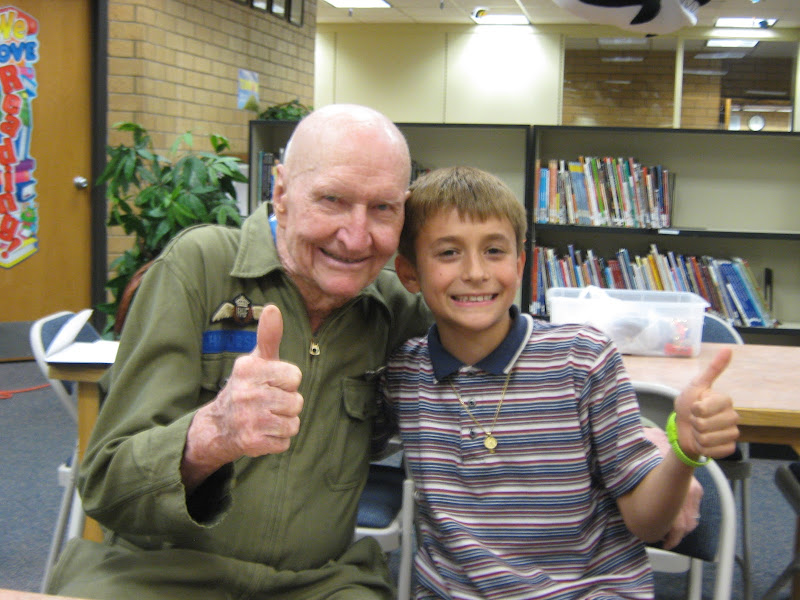


Colonel Gail still drops candies to children now around the world to deliver an important message. He tells them to be thankful for all that they have, to put others before self and to invites follow their dreams.
You can read Gail's story in several books:
Mercedes and the Chocolate Pilot, The Berlin Candy Bomber, Candy Bomber. Pietro, our future pilot, and dad met Gail at a candy drop in in Kaysville, UT.
It was a touching, uplifting and emotional experience.
Read more about it: http://www.sltrib.com/sltrib/news/54826155-78/candy-halvorsen-berlin-bombs.html.csp
Thank you Gail for your kindness and for reminding us to always be generous and thankful. May God Bless you.

On our way to Utah

The Mormon Temple

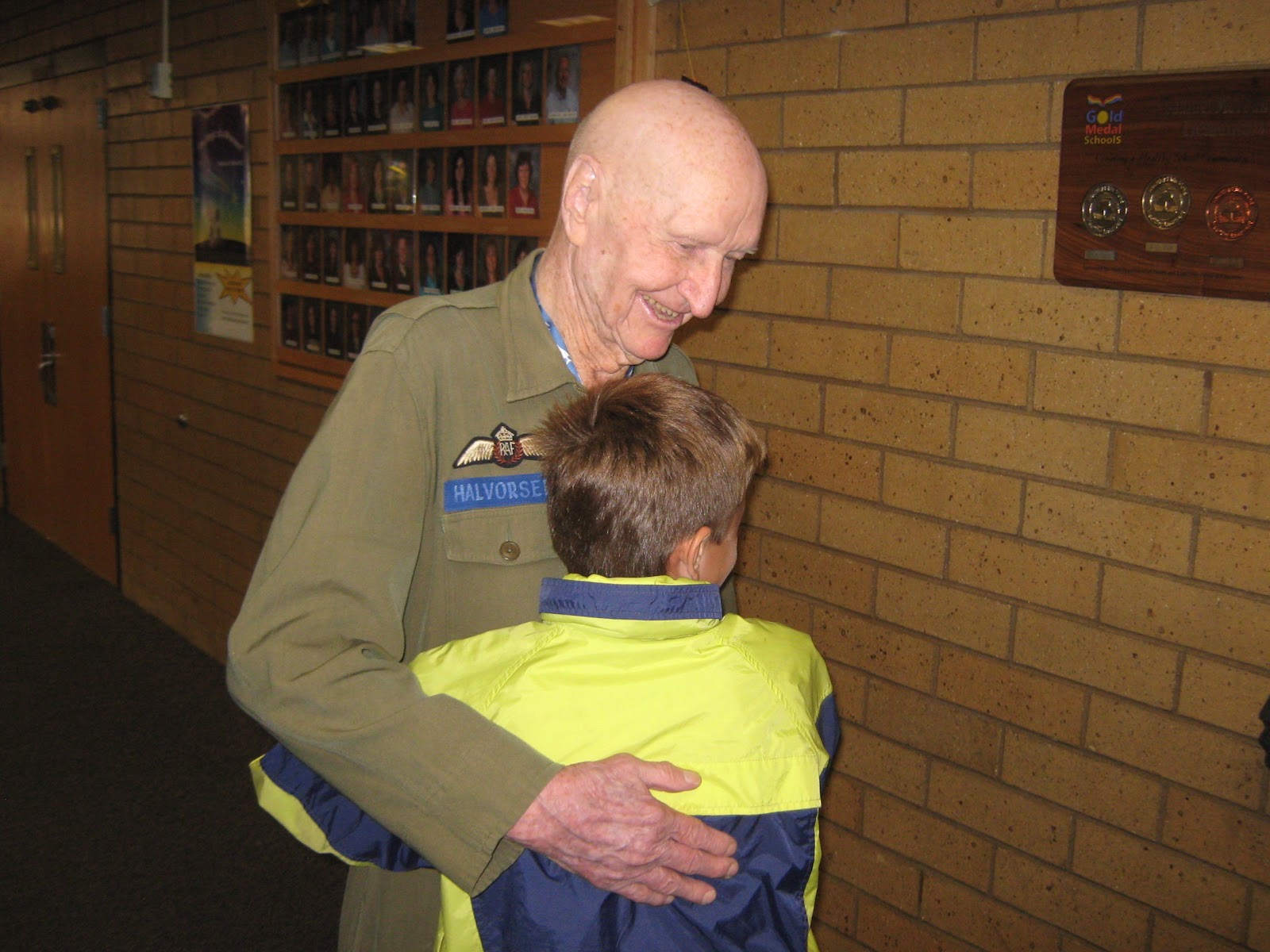
Pietro meets Gail

The helicopter used for the candy drop

Pilots rule

One last picture together

The Great Salt Lake
Friday, August 24, 2012
Thankfulness for: Oregon and... so much more
My theme of this trip and of the time since we have been back in Colorado has been thankfulness. Norine and I are trying to read together a book titled: One Thousand Gifts, Ann Voskamp. We hope to finish it by Christmas... Yes, reading time is very limited.... It is a wonderful, spiritual and inspiring read and a compelling invitation to be thankful to our creator for what we have and experience every single day, starting with the very small things.
Being thankful is helping to change my attitude and to enjoy each moment more.
All that we are, we have received for free from God and does not come from our ingenuity, money or hard work. I am thankful for my children and their health and smiles and hugs even when Iam grumpy. I am thankful for the opportunity to visit wonderful places and experience life in other parts of the world. I am also thankful for the sun that shines and the cool air that is starting to bring touches of fall to Colorado. I am thankful for my wife and life companion, who accepts me for what I am and helps me to be better. And today, I am thankful for these pictures and the memories that they bring back. And for "Jonathan", the little Redwood tree that Pietro bought at the rangers' station in Crescent City, CA. I hope it will survive here in Colorado.
If you read my previous post, I promised to "disclose" the location of the pictures shown there. The waterfall is Multnomah Falls near the Columbia River. The pictures by the ocean were taken in Bandon and Tilamook (yes, that's where they make Tila-Mook cheese), Oregon.
I still want to post a video of the 19-legged star fish. Just need some time to pull it off the video-camera. Sign off for automated email updates (up on the right side of this page), so you'll know when I do.
I also have a couple of more exciting things (at least, I think they are) to post really soon, so do come back to visit again...


If you read my previous post, I promised to "disclose" the location of the pictures shown there. The waterfall is Multnomah Falls near the Columbia River. The pictures by the ocean were taken in Bandon and Tilamook (yes, that's where they make Tila-Mook cheese), Oregon.
I still want to post a video of the 19-legged star fish. Just need some time to pull it off the video-camera. Sign off for automated email updates (up on the right side of this page), so you'll know when I do.
I also have a couple of more exciting things (at least, I think they are) to post really soon, so do come back to visit again...

Pietro, at the amazing 747-Evergreen water park in McMinnville, OR.
Scooby doo on his shirt seems excited as well.

Erosion

starfish at a tide pool in Bandon, OR

Enjoying a cool beach and tide pools

I have always wondered why the Oregon license plate has a huge evergreen tree on it, and not the beach. After driving hundreds of miles through the state, I now know. Duh....

One of the most beautiful lakes we have ever seen: Crater Lake, OR
Wednesday, August 15, 2012
The sound of the Ocean
What do you think about when you hear the word "ocean"?
For our family it is not just hot sun, warm waters and snorkeling, but rather quiet beaches, cool breeze and amazing tide-pool discoveries in early morning fog. We spent ten days driving along the Oregon coast and experiencing sand dunes, cold ocean water, observing star fish and anemones, watching birds flying just above the crest of waves and then diving beak first to catch a fish. What kind of birds are those?
More than anything, Norine and I enjoyed sitting on a quiet cool beach and just listening to the sound of the waves. Have you ever listened to the waves? what do they tell you? They have a soothing effect and the ability to make me forget about my worries and list of things to do...
So where were the photos below taken? Wait for the next post to find out.


For our family it is not just hot sun, warm waters and snorkeling, but rather quiet beaches, cool breeze and amazing tide-pool discoveries in early morning fog. We spent ten days driving along the Oregon coast and experiencing sand dunes, cold ocean water, observing star fish and anemones, watching birds flying just above the crest of waves and then diving beak first to catch a fish. What kind of birds are those?
More than anything, Norine and I enjoyed sitting on a quiet cool beach and just listening to the sound of the waves. Have you ever listened to the waves? what do they tell you? They have a soothing effect and the ability to make me forget about my worries and list of things to do...
So where were the photos below taken? Wait for the next post to find out.


Wednesday, March 28, 2012
Colorado History Bee
Here is a short exert from the Colorado History Bee held on March 10, 2012. Guess who won?
Friday, February 3, 2012
Antipode: "What is yours?"
Antipodal Point (antipode) refers to the point that is located "diametrically opposite" to a predefined location on a sphere. So where is the antipode of the place your town or of your house?
Find out using this cool graphical tool.
Wednesday, February 1, 2012
I met Rick Santorum today
He was speaking here in Colorado, ahead of the Republican primary in the State next Tuesday.
I really admire his courage and agree with most of what he stands for. After all, we are both committed Catholic fathers. :)
While you may think that this has nothing to do with my geography blog, I still find it fitting. You see, one of the reasons I study and want to teach others about geography is to speak up about the value of every human life, no matter how poor, how small, or where he/she happens to live on this earth.
In this video, Rick Santorum shares this truth with a very personal example.
I hope you enjoy it.
Sunday, January 15, 2012
The Sistine Chapel
The Sistine Chapel is a building within Vatican city (in Rome, Italy), which is famous for the incredible paintings and frescos by many Renaissance artists, including Michelangelo, Botticelli and Raphael.

The Vatican has now a webpage on which you can move around and get a close up look at all the paintings.
Click on the picture below to view this beautiful masterpiece. Use your mouse to move around and get closer to the paintings. Don't forget to look at the ceiling. Enjoy.
Monday, January 9, 2012
Geography nuggets - Basics of GPS
Here is a video explaining the basics of how GPS systems work.
While a GPS is a useful tool in many situations and jobs, they are often overused preventing people from interacting, analyzing and enjoying the environment around them, understanding where they are, etc...
Are your school, church and grocery store located north, east, south or west of your house?
Which highway takes you to your neighboring state (or country) to the north?
Have fun with the GLP, if you own one, but don't forget to explore the world around you with your senses and using your mind. It is a wonderful tool that God has given us.
Saturday, December 31, 2011
Geography nuggets - Country Series - North Korea
Here is a little bit about the history and current situation of North Korea. Enjoy. As usual, all videos are uploaded on my website: www.geokid.org
Friday, December 23, 2011
What is North Korea like?
North Korea was not on top of my blogging priorities, but the recent death (December 17) of its leader Kim Jong-il, changed that.
North Korea is a communist country of which very little is known, so when I found this great 15 minutes BBC documentary about it, I thought it would be worth sharing it my readers. I may blog at a different time about the history of this secretive and poor country and how it has become what it is right now. In the meanwhile, I have added a Wikipedia map, to the picture below showing the location of North Korea.
Click on the picture to watch the "interesting" 15 minutes documentary.

Click on the picture to watch the "interesting" 15 minutes documentary.
Glimpses of real North Korean life behind the facade
Sunday, December 18, 2011
Geography nuggets - Country Series - Israel
As part of my Geography education program, I am going to start a series of videos about individual countries. It will not cover things like capital, longest river or highest peak but rather focus on history and current situation of each featured country. With Christmas approaching, it seems appropriate for the first video to talk about Israel, the land where Jesus was born and lived. After all, it is his birth that we celebrate every year on December 25. If Jesus had not been born and impacted so many lives throughout history, this special holiday would not exist on our calendar.
Of course, not everything about a country can be covered in 10 minutes, but I hope my videos will spur your interest to go find out more about places you might not know much about.
In the meanwhile, let me know which countries you would like me to talk about in my future videos and, once you have watched this first one, try to find out in which of the three occupied territories in Palestine is Bethlehem located. Let me know.
Of course, not everything about a country can be covered in 10 minutes, but I hope my videos will spur your interest to go find out more about places you might not know much about.
In the meanwhile, let me know which countries you would like me to talk about in my future videos and, once you have watched this first one, try to find out in which of the three occupied territories in Palestine is Bethlehem located. Let me know.
Saturday, December 10, 2011
Geography nuggets - Where on earth are you? (part 2)
I hope you enjoyed my first video about how to determine our position on the planet earth. This is part 2. It explains a little more about degrees of Latitude and Longitude and their divisions: minutes and seconds.
A future video will cover how GPS devices use and display this information.
What are the coordinates of your city?
Tuesday, December 6, 2011
Geography nuggets - Where on earth are you? (part 1)
Simple video about how to determine our position on the earth.
What are Latitude and Longitude and how do they work?
The explanation takes a while, if you are not familiar with the subject, so I broke this lesson up in more than one part.
The second part will be uploaded later. Let me know if you have any questions.
Saturday, December 3, 2011
7 Billion people - A problem or a blessing?
If you watched or listened to the news in the past month, chances are you have heard about the earth population reaching 7 billion sometime before the end of 2011.
Population is an important aspect of Geography, so for today's blog, I am presenting four very different perspectives about the birth of the 7 billionth person. Click on each picture below to read the articles.


(watch the video embedded halfway down the page in the article)

The BBC video points out that, if all 7 billion people lived in a city with the same density of Paris, we would all fit within the country of France, which is slightly smaller than the state Texas, with room to spare.
The CNN writer, on the other hand, asks the question: What does this mean for the environment?
My hope this Christmas season is that more people will come to realize that every single person on earth is an asset bringing his/her own unique gifts to this world, not just consuming the earth resources.
Here are a few examples: Benjamin Franklin was the 8th child of 17 children his father had.
Celine Dion is the youngest of 14 children. Queen Victoria of England had 9 children.
Wilma Rudolph, who was considered the fastest woman in the world in the 1960s and competed in two Olympic Games, was born prematurely at 4.5 lbs. , the 20th of 21 other brothers and sisters.
Wednesday, November 30, 2011
Geography nuggets - Why we have seasons
Brief introduction to why there are seasons. A lot more can be said about "tilt of the earth axis", "distance from the sun", "equinox", "solstice", etc. Still, this should help you get a good basic idea of why we have seasons. It's my first Geography video lessons. Stay tuned for many more to come.
The video will also be available on my educational website: www.geokid.org
Sunday, November 27, 2011
World countries and their debt...
Preface
The locations of Italy and Greece, referenced in my notes below, are shown here


The locations of Italy and Greece, referenced in my notes below, are shown here


###########################
I recently ran into the following graph on the BBC news website. Click on the image (or link) below to read the short interactive article that clearly and concisely illustrates the basics behind the current debt problem of Greece and Italy along with other European countries, Japan and the United States.Regular link: http://www.bbc.co.uk/news/business-15748696
It would surely be interesting to see such a graph for developing countries, so I did some research. While I could not locate one, I did find out some interesting information. See the links at the end of this post, if you want to read more about it.
Reading about the debt crisis currently faced by so many nations brought about some questions that are not easy to answer, like:
Why are so many European countries that have been considered wealthy for a long time in such financial strain?
What are the causes of debt of the developing countries? What can be done to relieve their debt which often cripples their ability to improve their economy?
Why is there more concern about rescuing the economy of Greece and Italy than that of Somalia, for example?
While there is debate about the reasons as to why so many developing countries are buried under the weight of foreign debt, here are a few causes to consider:
Legacy of colonialism, debt accumulated during periods of war and political instability after their independence from their original colonial power, lack of natural and human resources (often a result of colonialism as well), lack of education, nutrition and infrastructure as a result of years of civil war.
Whatever the reason(s), I think it is hard to argue that the attention currently given to struggling developed countries versus struggling developing countries is very different.
A thought came to mind. All of us have been given a second chance at one point or another during our lifetime: maybe we did something wrong as a child, or at work or we may have hurt our spouse, and have been forgiven...
Shouldn't we give a second change to others as well?
If so, how can we relieve the pain of those struggling nearby or far away?
###############################
For more in depth analysis, see for example:
Thursday, November 17, 2011
A world without boundaries
The video below was put together using a collection of photos taken from the International Space Station (ISS). It was assembled by an online newspaper. So forgive me for the 15 seconds advertisement at the beginning....
All the videos are courtesy of the Image Science & Analysis Laboratory, NASA Johnson Space Center, and the music is Chopin's Nocturne No. 2 in E Flat Major, Op. 55, from the public domain music resource Musopen. Other videos are available for free download from this website (http://eol.jsc.nasa.gov/Videos/CrewEarthObservationsVideos/).
Are you interested in seeing the international space station when it passes over your house? Follow this link:http://spaceflight.nasa.gov/realdata/sightings/
What locations do you recognize on the video?
City lights appear white, yellow or orange depending on intensity and concentration, so what are those red dots that are visible in some areas?
A couple of things strike me every time I look at images of the earth from space, especially at night. Although there is no clear boundary separating earth’s atmosphere and outer space, the Kármán line which lies at an altitude of 100 kilometers (62 mi) above sea level, is commonly used to define this boundary. Our lives depend on this thin layer of gases containing the air we breathe. Amazing!
The second, even more striking thing is that political lines disappear when we look at the world from space. City lights of the same color dot the landscape in North America as well as in Africa and Asia. Rivers flow from mountains to oceans crossing international boundaries without passports. Snow is visible on top of mountains in both the northern and southern hemisphere and thunderstorm clouds move over lands and seas without following predefined flight paths over "friendly skies".
The world is one smooth continuum of wonderful places. We humans are the ones that have divided it up with boundaries that are so familiar to us on our colorful political maps. We are the ones who directly or indirectly contribute to radically different standard of living in countries far apart from each other, or in bordering cities like El Paso, TX and Ciudad Juarez, Mexico:
View Larger Map
Or Jerusalem and the Gaza Strip:
Watching the world go by at night makes those flat maps come alive. It gives us a different prospective of cities and highways, of populated places and remote locations, of vast oceans and long rivers. If we take some time to reflect about it, it gives us a better understanding of how people and places fit together and how we are all connected. The ISS takes only about 90 minutes to travel around the earth. During that time, it flies over rich countries, city slums, people at war and people on vacation. So little time, so few miles, yet such striking differences.
Tuesday, November 15, 2011
How do I study Geography?
People often ask me: "How do you study Geography? There is so much to know and read about... It's overwhelming . Where do I start? How do I get a child interested in such a broad subject?"
As my wife often tells me: "Your first response to practically any question is to grab an Atlas..." When studying geography, you don't necessarily have to follow a set order. Start by looking up a locations of interest, possible vacation destinations, states or countries where friends live, etc. As you look at a map you will start noticing things like rivers, historical landmarks, funny names of locations. Look them up online, read and find pictures about them. Slowly but surely, you will start to make connections.
You read about Silicon Valley, but never thought about why it has such an unusual name. You heard about lake Okeechobee but never realized that its funny name, like many others in that area (Okefenokee, Seminole, etc.) are Indian names, given by the tribes that lived there.
Another important way to learn Geography is to make it a part of our daily life. A few days ago, I blogged about looking up the country of origin of the clothes in my closet. Below, is another simple way to learn about places. Check out the departure and arrival screens at your local airport. You may discover some interesting places. And, if you are from one of those cities I mispronounces the name of, please forgive me.
As we make connections, discover interesting and fun facts and associate names with events and pictures, we start to get a global understanding of the world around us. Give it a try, you may be surprised at what you will discover...
As my wife often tells me: "Your first response to practically any question is to grab an Atlas..." When studying geography, you don't necessarily have to follow a set order. Start by looking up a locations of interest, possible vacation destinations, states or countries where friends live, etc. As you look at a map you will start noticing things like rivers, historical landmarks, funny names of locations. Look them up online, read and find pictures about them. Slowly but surely, you will start to make connections.
You read about Silicon Valley, but never thought about why it has such an unusual name. You heard about lake Okeechobee but never realized that its funny name, like many others in that area (Okefenokee, Seminole, etc.) are Indian names, given by the tribes that lived there.
Another important way to learn Geography is to make it a part of our daily life. A few days ago, I blogged about looking up the country of origin of the clothes in my closet. Below, is another simple way to learn about places. Check out the departure and arrival screens at your local airport. You may discover some interesting places. And, if you are from one of those cities I mispronounces the name of, please forgive me.
As we make connections, discover interesting and fun facts and associate names with events and pictures, we start to get a global understanding of the world around us. Give it a try, you may be surprised at what you will discover...
Friday, November 11, 2011
If I were born somewhere else... Part 2
What would I do if I were born in a Central American country, or in rural Africa without a job and the opportunity to support myself and my family? I often wonder about that...
As you ponder about what your life would be like "if you were born somewhere else", take some quiet time to watch this touching documentary, which follows the journey of a few young people leaving El Salvador in search for a better future.
Across Mexico: Chasing an impossible dream - Risking it all - Al Jazeera English
If you don't know where El Salvador is, an interactive Google Map is provided below:
Subscribe to:
Posts (Atom)